Introduction
A gaming headset can improve how you hear, communicate, and focus while playing. It can make team chat clearer, help you notice important in-game sounds, and make long gaming sessions feel more immersive.
But not every gaming headset is worth buying. Some models look impressive but feel uncomfortable. Others have strong audio but weak microphones. Some work well on PC but lose features when used with a console.
Before buying a gaming headset, it helps to understand what actually matters. The right choice depends on your platform, gaming style, comfort needs, and how often you use voice chat.
Key Takeaways
- The best gaming headset depends on how you play, not just the brand, price, or design.
- Comfort matters because even good sound becomes frustrating if the headset is painful to wear.
- Wired headsets are simple and reliable, while wireless headsets offer more freedom.
- Microphone quality matters if you play multiplayer games, use Discord, or stream.
- Platform compatibility should be checked before buying, especially for console and mobile gaming.
Affiliate Disclaimer: Some links on this site are affiliate links. If you buy through them, we may earn a small commission, at no extra cost to you. Please do your own research before making a purchase.
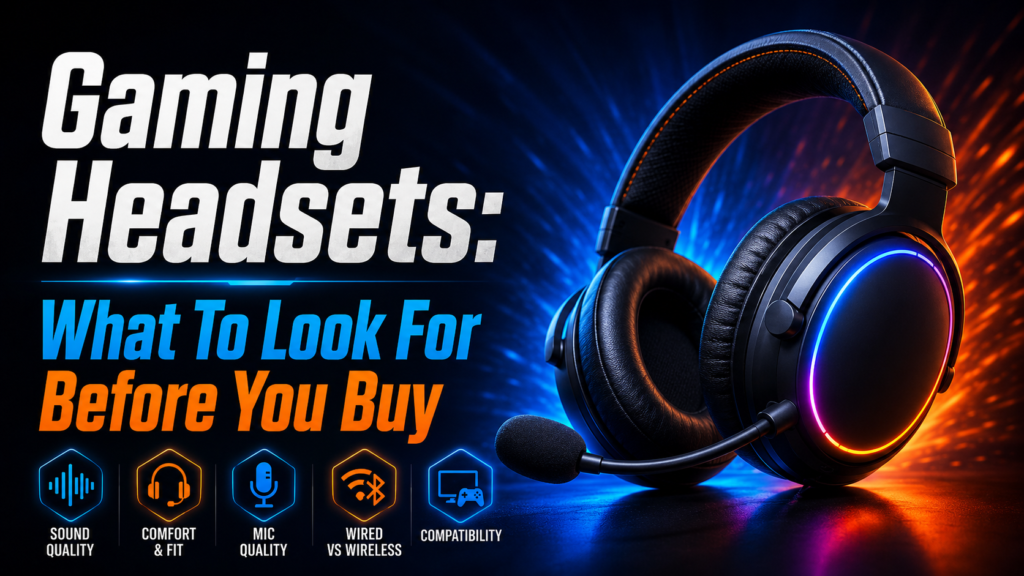
How To Choose The Right Gaming Headset
Start with how you actually play.
A competitive player may care most about directional audio, low delay, and a microphone that keeps voice chat clear. A casual player may care more about comfort, simple controls, and a fair price. A streamer may need a headset that works well for long sessions and does not create distracting microphone noise.
Your platform also matters. PC players usually have more flexibility with USB, Bluetooth, and software controls. Console players need to make sure the headset supports their system properly. Mobile gamers may need USB-C, Bluetooth, or a 3.5mm connection, depending on the device.
Price should not be the only deciding factor. A cheaper headset can be a good choice if it is comfortable, compatible, and clear enough for your needs. An expensive headset can still be a poor fit if it is heavy, has weak battery life, or includes features you do not use.
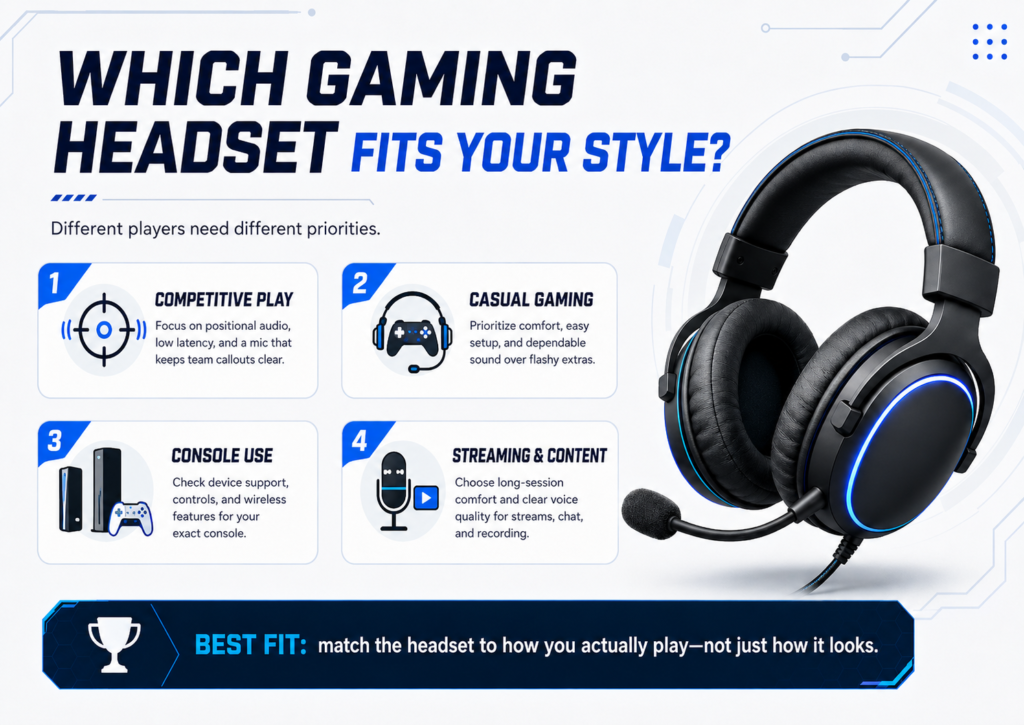
Which Type Of Gaming Headset Fits Your Gaming Style?
Different players need different things from a headset.
Competitive Gaming
Competitive gamers should prioritize clear positional audio, low latency, and reliable communication.
In games where timing matters, small audio details can help. Footsteps, reload sounds, distant movement, and directional effects may give you useful information. A headset does not replace skill, but it can make important sounds easier to notice.
A clear microphone also matters. If teammates cannot understand your callouts, the headset is not doing its job.
Casual Gaming
Casual gamers usually need comfort, easy setup, and good overall value.
If you play after work, on weekends, or mostly for relaxation, you probably do not need every advanced feature. A headset with clear sound, a comfortable fit, and a simple connection is often enough.
For casual use, avoid buying only for RGB lighting or aggressive design. Those details may look nice, but they do not matter as much as comfort and reliability.
Console Gaming
Console gamers should focus on compatibility and ease of use.
Some headsets work through the controller. Others use USB dongles or wireless connections. Features can vary depending on whether you use PlayStation, Xbox, Nintendo Switch, or another device.
Before buying, check whether the microphone, volume controls, mute button, and wireless features work with your specific console.
Streaming And Content Creation
Streamers and content creators need comfort and clear voice quality.
A headset can be useful for starting out because it combines audio and microphone functions in one device. However, the microphone should be clear enough that viewers can understand you without harsh noise, echo, or muffled sound.
Creators who stream often may eventually move to a separate USB microphone, but a good headset is still a practical starting point.
Wired Vs Wireless Gaming Headsets
Wired and wireless headsets both make sense, but they solve different problems.
Wired headsets are usually easier to use. You plug them in, and they work. They do not need charging, and they are less likely to have connection problems. This makes them a strong choice for players who want reliability.
Wireless headsets are better for freedom and cleaner setups. They remove cable clutter and make it easier to move around. This can be helpful if you play from a couch, use a larger desk, or dislike wires.
The trade-off is battery life. Wireless headsets need charging. Some also depend on a dongle or specific connection method. If the battery dies during a session, the convenience disappears quickly.
Neither option is automatically better. Wired is often better for simplicity. Wireless is often better for comfort and movement.
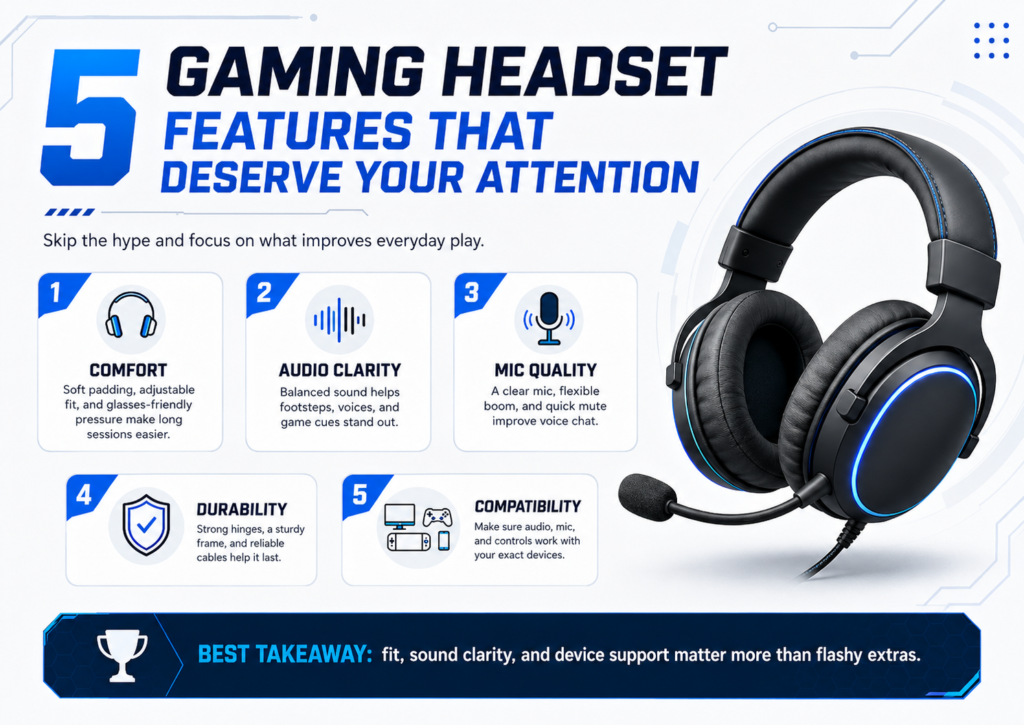
What Features Actually Matter?
Gaming headsets often advertise many features, but only a few have a major impact on daily use.
Comfort
Comfort should be one of the first things you consider.
A headset touches your ears, head, and sometimes your jaw for long periods. If the ear cups are too tight, the headband is stiff, or the headset feels too heavy, you may stop using it even if the sound is good.
Look for padded ear cups, an adjustable headband, and a design that fits your head size. If you wear glasses, comfort becomes even more important because some headsets press against the frames.
Sound Quality
Good sound quality means clear, balanced audio.
Some gaming headsets exaggerate bass to make explosions and action scenes feel stronger. That can be fun, but too much bass may make footsteps, dialogue, and smaller details harder to hear.
For gaming, clarity is usually more useful than volume. A good headset should make important sounds easy to separate, especially in multiplayer games.
Microphone Quality
Microphone quality matters if you use voice chat.
Your voice should sound clear, not muffled or distant. A flexible or adjustable mic helps because you can position it closer to your mouth. A mute button is also useful because it lets you quickly control when others can hear you.
Noise reduction can help, but it should not be the only feature you rely on. A poor microphone with noise reduction may still sound poor.
Build Quality
Build quality affects how long the headset lasts.
Weak hinges, thin cables, loose ear cups, and fragile headbands can become problems over time. A headset does not need to be expensive to be durable, but it should feel stable enough for regular use.
If you travel with your headset or share it with others, durability matters even more.
Platform Compatibility
Compatibility is one of the easiest things to overlook.
A headset may work on one device but not fully work on another. For example, audio may work, but the microphone or controls may not. Wireless headsets can be even more specific because some use platform-specific dongles.
Before buying, check compatibility with your exact platform: PC, PlayStation, Xbox, Nintendo Switch, mobile, or handheld gaming device.
Pros And Cons Of Gaming Headsets
| Pros | Cons |
|---|---|
| Combines audio and microphone in one device | Quality varies a lot between models |
| Helps with team communication | Some headsets become uncomfortable during long sessions |
| Makes game audio more private | Wireless models need charging |
| Can improve awareness in multiplayer games | Some models focus more on looks than performance |
| Useful for gaming, calls, and streaming | Not every headset works with every platform |
| Keeps setup simple compared with separate headphones and microphone | Built-in microphones may not match standalone mic quality |
Gaming headsets are practical because they solve multiple needs at once. They are especially useful for players who want a simple setup.
The downside is that convenience can come with compromises. A headset may have good audio but average microphone quality. Another may be comfortable but less durable. This is why it is better to evaluate the headset as a full package instead of focusing on one feature.
Common Mistakes To Avoid
One common mistake is buying only based on appearance. RGB lighting, large ear cups, and bold designs can make a headset look powerful, but they do not guarantee better sound or comfort.
Another mistake is ignoring comfort. A headset that feels fine for ten minutes may feel heavy or tight after two hours. Comfort is not a small detail. It directly affects how often you will use the headset.
A third mistake is overlooking compatibility. This is especially important for console players. Always check whether the headset supports your platform and whether all major functions work.
Another mistake is assuming wireless is always better. Wireless is convenient, but it adds battery management. If you do not want to charge another device, wired may be the better option.
Finally, avoid paying extra for features you do not need. Surround sound, RGB lighting, companion apps, and advanced controls can be useful, but only if they fit your actual gaming habits.

Conclusion
A gaming headset is worth considering if you want clearer communication, more private audio, and a more focused gaming experience. The best choice is not always the most expensive model or the one with the most features.
The right headset should match how you play. It should feel comfortable, sound clear, work with your platform, and include a microphone that fits your needs.
Before buying, focus on practical details first: comfort, sound, microphone quality, connection type, durability, and compatibility. Those features matter more than flashy design or marketing claims.
Frequently Asked Questions
Are Gaming Headsets Worth Buying?
Yes, gaming headsets are worth buying for many players, especially those who play multiplayer games, use voice chat, or want private audio. They combine headphones and a microphone in one device, which makes them convenient for gaming setups.
Is Wired Or Wireless Better For Gaming?
Wired is usually better for simplicity and reliability. Wireless is better for freedom of movement and a cleaner setup. The better choice depends on whether you value convenience or consistency more.
What Matters Most When Buying A Gaming Headset?
The most important factors are comfort, sound quality, microphone clarity, platform compatibility, and build quality. Extra features are useful only after those basics are covered.
Can Gaming Headsets Be Used For Everyday Tasks?
Yes. Many gaming headsets can be used for video calls, online classes, remote work, music, movies, and general computer use.
Do All Gaming Headsets Work With Every Platform?
No. Some headsets work across many platforms, while others are designed for specific systems. Always check whether the headset supports your PC, console, phone, or handheld device before buying.
Is A Gaming Headset Better Than Regular Headphones?
A gaming headset is better if you need a built-in microphone and simple voice chat. Regular headphones may be better if you only care about music quality or already use a separate microphone.
Do Gaming Headsets Help In Competitive Games?
They can help by making important sounds easier to hear, such as footsteps, movement, and teammate callouts. They do not replace skill, but they can support better awareness.

0 Comments