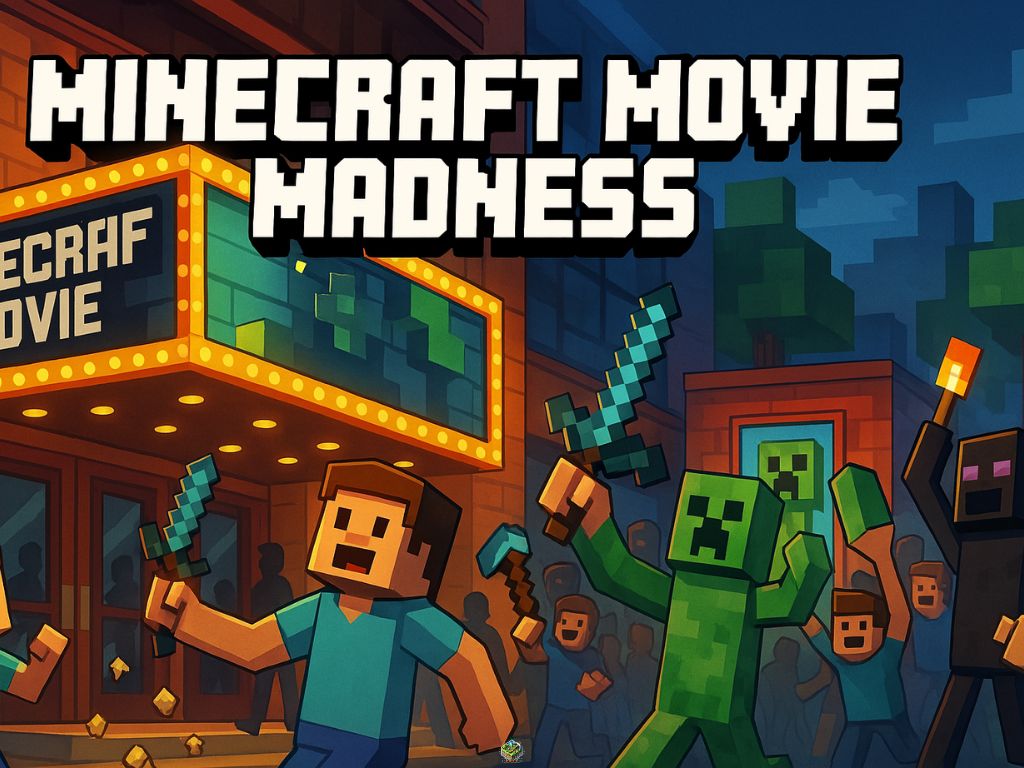
It was expected to be another major video game adaptation release. Instead, the Minecraft Movie ignited a wave of fan reactions so intense that some theaters struggled to keep control.
Over opening weekend, reports and viral videos began circulating from cinemas in multiple regions showing packed audiences chanting, cheering, and reacting in unison during key scenes. Fans arrived in costume, quoted in-game lines at full volume, and treated screenings less like traditional movie showings and more like live events. What started as playful enthusiasm escalated quickly in certain locations, catching theater staff and casual moviegoers off guard.
This was not simply a box office success story. It was a clear signal that Minecraft’s audience does not consume media passively. When the franchise finally reached the big screen, fans did not just watch the movie. They showed up ready to participate, and theaters were forced to adapt in real time.
Key Takeaways
- Minecraft’s theatrical release triggered unusually loud and participatory audience behavior in some locations.
- Viral moments, especially the “Chicken Jockey” scene, played a major role in coordinating crowd reactions.
- Not all screenings were disruptive, but repeated incidents forced theaters to respond with warnings and policy changes.
- The film’s box office success shows the commercial power of fandom-driven adaptations.
- Studios and theaters are now facing new questions about how to manage highly engaged gaming audiences.
- The confirmed sequel suggests this was not a one-time anomaly, but the start of a larger trend.
What You Need to Know Before Watching the Minecraft Movie
If you are planning to see the Minecraft Movie in theaters, expectations matter. This is not behaving like a standard family film in every location.
Across multiple screenings, audiences have treated the movie as a shared experience rather than a quiet viewing. Fans are arriving ready to react together, quoting in-game phrases, cheering during recognizable moments, and responding loudly to scenes that have already gone viral online. In some theaters, this has created an atmosphere closer to a live fan event than a traditional movie showing.
One scene in particular has become a flashpoint. A brief moment involving a “Chicken Jockey” reference has spread rapidly across social platforms, prompting synchronized reactions in certain screenings. While many viewers describe it as harmless excitement, others report disruptions significant enough to affect the viewing experience for families and casual moviegoers.
Box office performance adds context to the scale of the phenomenon. The film’s opening weekend delivered blockbuster-level revenue in both North American and international markets, confirming that this behavior is not isolated to a niche audience. The volume of attendees alone increases the likelihood of louder, more reactive crowds, especially during peak showtimes.
Finally, viewers should be aware that post-credits content has fueled speculation about future installments. That anticipation has contributed to repeat viewings and heightened crowd energy, particularly among core fans who already know what moments they are waiting for.
$300 Million and Counting: How Minecraft Reshaped the Box Office Conversation
Minecraft’s theatrical debut was not just successful. It was disruptive.
Within its opening weekend, the Minecraft Movie posted global box office numbers that placed it among the strongest debuts ever for a video game adaptation. Industry trackers reported hundreds of millions in worldwide ticket sales within days, outperforming expectations and forcing comparisons to established franchises that traditionally dominate family and event cinema.
What makes this performance notable is not just the revenue, but the audience behavior driving it. The turnout was fueled by a deeply engaged fanbase that treated the release as a cultural moment rather than a casual outing. Many attendees were not discovering Minecraft for the first time. They were longtime players responding to a property they already felt ownership over.
Studios have attempted to adapt video games for decades, often smoothing out quirks to appeal to broader audiences. Minecraft succeeded by doing the opposite. The film leaned into the game’s visual simplicity, chaotic humor, and internet-native references. Familiar characters and exaggerated reactions were not polished away. They were amplified.
That creative decision paid off. Fans responded not just by buying tickets, but by showing up loudly and visibly, turning screenings into moments that spilled onto social media and extended the film’s reach far beyond traditional marketing.
For Hollywood, the message was clear. When an adaptation respects the source material and its community, the audience does more than show up. It mobilizes.
One Scene, One Phrase, and a Crowd Reaction Nobody Expected
The escalation did not happen gradually. It hinged on a single moment.
Midway through the film, a brief scene referencing a “Chicken Jockey” triggered an outsized response from portions of the audience. The phrase, long embedded in Minecraft culture, has circulated for years as a meme among players. When it appeared on screen, some viewers reacted instantly, shouting the line aloud, cheering, and standing up in unison.
Videos of these reactions spread quickly across social platforms. Clips showed entire rows chanting together, others reenacting exaggerated movements, and in a few cases, audiences spilling into aisles during the moment. The repetition of these videos helped standardize the reaction. Fans arriving later knew exactly what scene was coming and how others had responded before them.
Not every screening experienced the same intensity. Many audiences watched without incident. However, in theaters where large groups of highly engaged fans attended together, the reaction crossed from excitement into disruption. Staff reports and viewer accounts described difficulty restoring order once the moment passed, particularly when chants continued beyond the scene itself.
For some fans, the moment became a shared joke and a badge of participation. For others, especially families and casual viewers, it fractured the experience. The same scene that energized one group became the reason another group left early.
The divide highlighted something larger than a single meme. It exposed the challenge theaters face when internet-driven fandom behavior collides with traditional moviegoing norms.
When Fandom Met Policy: How Theaters Responded to the Disruptions
As viral clips spread and reports accumulated, theater operators were forced to respond in real time.
In several locations, staff posted warning notices outside screening rooms reminding guests that disruptive behavior would not be tolerated. These messages were not aimed at excitement itself, but at prolonged shouting, running through aisles, and throwing objects, all of which had been reported during particularly rowdy showings. In a small number of cases, local authorities were contacted after staff were unable to de-escalate situations internally.
The impact extended beyond individual screenings. Employees described difficulty maintaining a safe environment when reactions became unpredictable, especially during family-oriented showtimes. Parents with young children reported leaving early, while other moviegoers requested refunds after repeated interruptions.
Not every theater chose a strict approach. Some operators experimented with designated screenings designed to accommodate louder audiences. These showings, often promoted as interactive or premium-format events, allowed cheering and chanting within defined limits. The goal was containment rather than suppression, acknowledging the demand while protecting standard screenings for quieter viewers.
The shift revealed a broader tension. Movie theaters are designed around shared etiquette, but Minecraft’s fanbase arrived with expectations shaped by online culture, gaming streams, and live events. When those worlds collided, policies that had gone unchanged for decades suddenly felt outdated.
This was no longer just about one movie. It was about how theaters adapt when fandom refuses to sit still.
Read our boring Minecraft Seeds Guide here.
What Comes Next: Minecraft’s Sequel and a Bigger Cinematic Bet
The response was loud enough that the industry did not wait for long-term analysis.
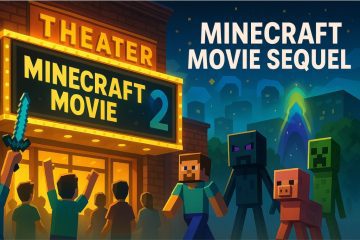
Within days of the opening weekend, confirmation surfaced that a sequel was already moving forward. The speed of that decision reflected more than box office confidence. It signaled that studios recognized the Minecraft Movie as the beginning of a longer-term cinematic strategy rather than a one-off experiment.
Early reports indicate that the follow-up will expand the core cast and introduce Alex, Minecraft’s second iconic playable character, alongside Jack Black’s Steve. For longtime players, that inclusion matters. It suggests the filmmakers are continuing to draw directly from the game’s identity instead of reshaping it for broader appeal.
There is also growing speculation around deeper exploration of Minecraft’s dimensions, including the Nether and the End. If those elements appear, the sequel is likely to lean further into the game’s darker mythology and heightened stakes, potentially increasing both narrative scope and audience intensity.
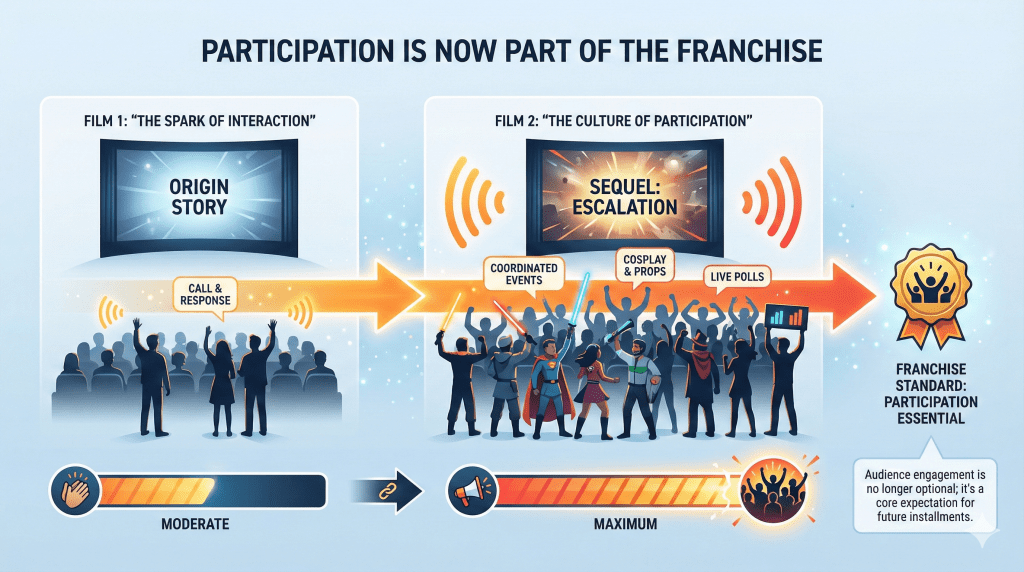
For theaters, this raises an uncomfortable question. If the first film turned screenings into participatory events, future installments may amplify that behavior rather than temper it. The audience response has now become part of the franchise’s identity, not an anomaly.
Minecraft’s transition from game to film is no longer just a content experiment. It is an evolving relationship between fandom, filmmakers, and the physical spaces where these stories are consumed.
The Minecraft Movie Was Not Just Watched. It Was Participated In.
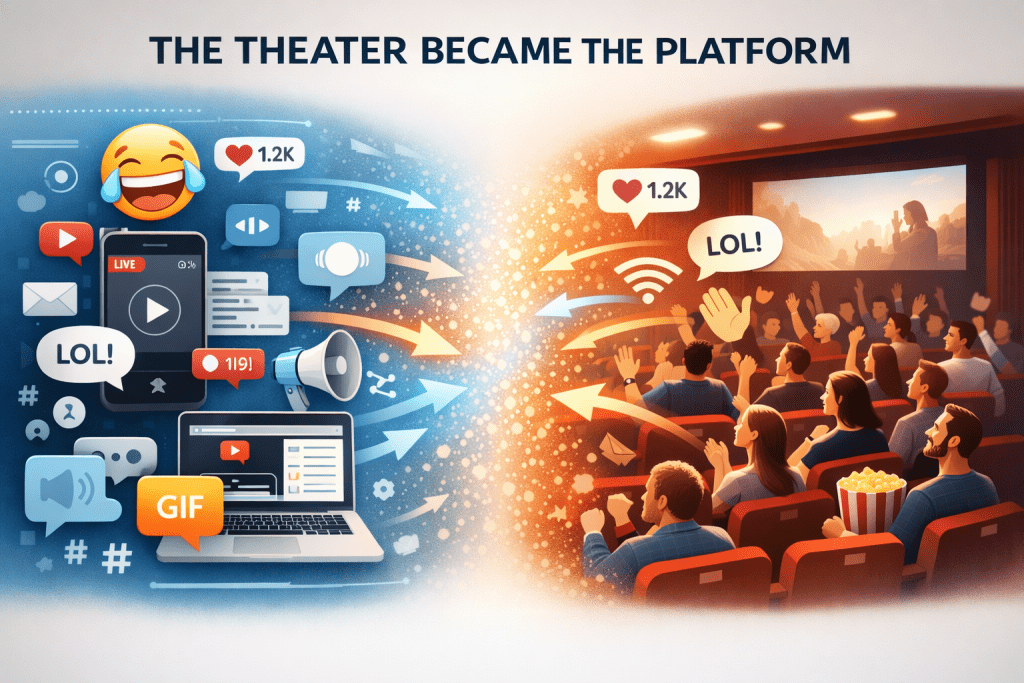
What unfolded in theaters was not random chaos. It was the collision of internet-native fandom with a space built for passive viewing. Minecraft fans brought the habits of livestreams, memes, and shared online moments into a physical room, and the result challenged long-standing assumptions about how movies are supposed to be experienced.
For some, the energy turned a screening into a once-in-a-lifetime event. For others, it crossed a line and disrupted what they expected to be a simple night at the movies. Both reactions can exist at the same time, and together they explain why this release became more than a box office story.
As studios continue adapting games with massive, deeply engaged communities, this moment may serve as a reference point. The question is no longer whether fans will show up. It is how theaters and filmmakers will design experiences that can handle them when they do.
If you attended one of these screenings, you were part of something larger than a movie release. You witnessed a shift in how fandom behaves when it leaves the screen and enters the room.
The Minecraft Movie may have started as an adaptation. It ended up becoming a case study.
Frequently Asked Questions
Were all Minecraft Movie screenings disruptive?
No. Many screenings proceeded normally. Reports of chanting, crowd movement, and disruptions were concentrated in specific showtimes and locations, often where large groups of highly engaged fans attended together.
What caused the crowd reactions?
A short scene referencing a “Chicken Jockey,” a long-running Minecraft meme, became a trigger point. Viral videos helped standardize reactions, leading audiences at later screenings to anticipate and replicate the behavior.
Did theaters really call the police?
In a limited number of cases, yes. Local authorities were reportedly contacted when staff could not safely restore order. These incidents were not universal, but they did occur in some regions.
How did theaters respond?
Responses varied. Some theaters issued warnings or removed disruptive guests. Others experimented with designated screenings designed to allow louder reactions while preserving standard showings for quieter audiences.
Is a Minecraft Movie sequel confirmed?
Yes. A sequel has been confirmed, with early reports indicating the introduction of Alex alongside Steve. Further details have not yet been officially announced.
Will future game movies face similar issues?
Possibly. Minecraft demonstrated how online fandom behavior can carry into physical spaces. Studios and theaters adapting other large gaming franchises may need to plan for more interactive audience behavior going forward.
1 Comment
Minecraft Movie Sequel Official: Here's What to Expect - Free Builders · April 13, 2025 at 4:07 am
[…] Missed the chaos that exploded when the first Minecraft movie hit theaters? Check out how fans turned screenings into real-world Overworld madness. […]