Introduction
Minecraft building ideas can feel endless, but not all builds are worth committing to in a survival world.
Some structures look impressive and add little value. Others quietly improve everything you do, from progression to resource management.
This guide covers Minecraft building ideas for survival worlds that are actually worth building. Practical bases, functional farms, and long-term projects that support how survival worlds are played.
The focus is not creativity for its own sake. It is choosing builds that last, scale, and make your world better over time.
Key Takeaways
- The best Minecraft building ideas balance usefulness, effort, and longevity.
- Survival builds should support progression, not distract from it.
- Strong worlds are built around intentional projects, not random structures.
- Bases and farms work best when planned as part of a larger system.
- Choosing the right builds early saves time and resources later.
Affiliate Disclaimer: Some links on this site are affiliate links. If you buy through them, we may earn a small commission, at no extra cost to you. Please do your own research before making a purchase.
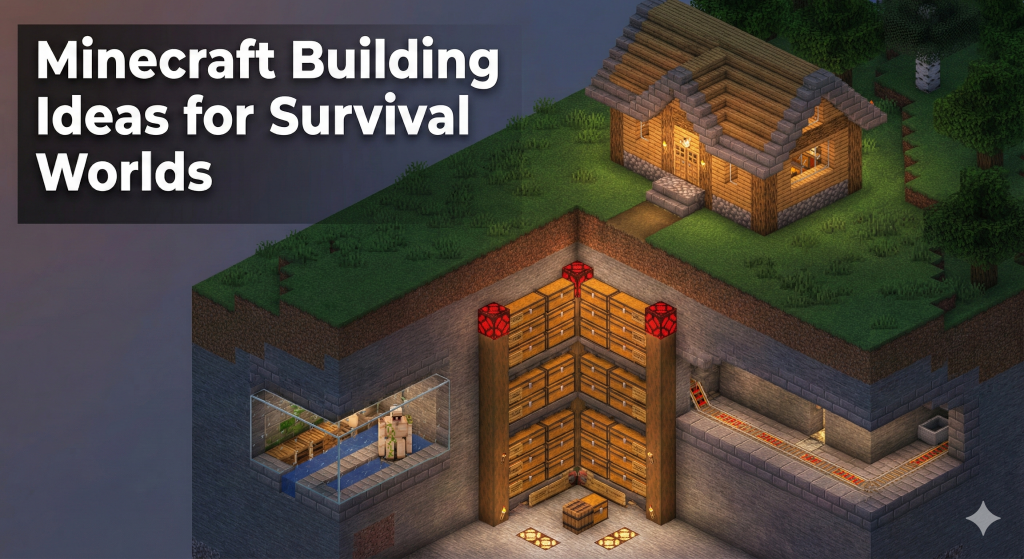
How to Choose What to Build in a Survival World
Not every Minecraft build deserves your time.
In survival worlds, building decisions matter because every project costs resources, effort, and attention. The goal is not to build more. The goal is to build things that continue to pay off as your world grows.
A strong survival build provides lasting value. It supports progression, improves efficiency, or creates a stable foundation for future projects.
Function Comes Before Appearance
Visual appeal matters, but function matters first.
In survival mode, a build should solve a real problem. Storage systems reduce friction. Farms stabilize resources. Centralized bases simplify movement and planning.
Decorative builds still have a place, but they should justify their cost. If a structure does not improve survival, it should serve a clear long-term purpose.
Build With Longevity in Mind
Many builds fail because they are designed only for the moment they are placed.
Survival worlds change as gear improves and resources become easier to obtain. Builds that cannot scale often get abandoned and replaced.
Before starting a project, consider whether it will still matter hours later. Temporary solutions are useful, but permanent builds should earn their permanence.
Think in Projects, Not Structures
Well-organized survival worlds grow through connected projects.
A base works best when it supports farms, storage, and expansion. Farms work best when they integrate with transport and processing. Planning builds as part of a system reduces clutter and improves flow.
Intentional planning is what separates a functional world from a chaotic one.
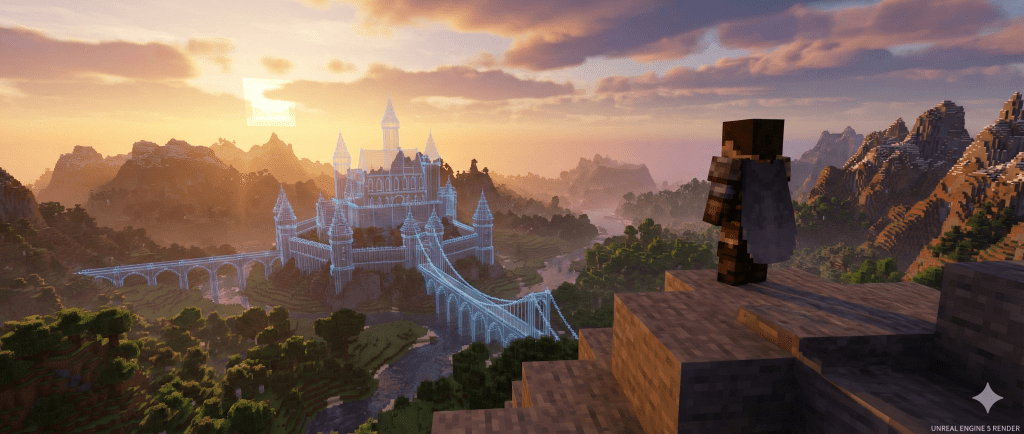
Core Survival Base Ideas. The Non-Negotiables
Every survival world needs a base that does more than look good.
A strong base acts as an anchor. It centralizes resources, shortens travel time, and gives structure to everything built around it. Without that foundation, worlds tend to sprawl and become harder to manage.
The best survival bases focus on utility first, then expand into style.
A Central Base Beats Multiple Small Builds
Early on, it is tempting to scatter builds across the map. That approach feels flexible, but it creates friction over time.
A central base simplifies storage, crafting, and upgrades. It reduces repeated travel and makes expansion easier to plan. When everything important lives in one place, progression feels smoother.
Secondary outposts still have value, but they should support the main base, not replace it.
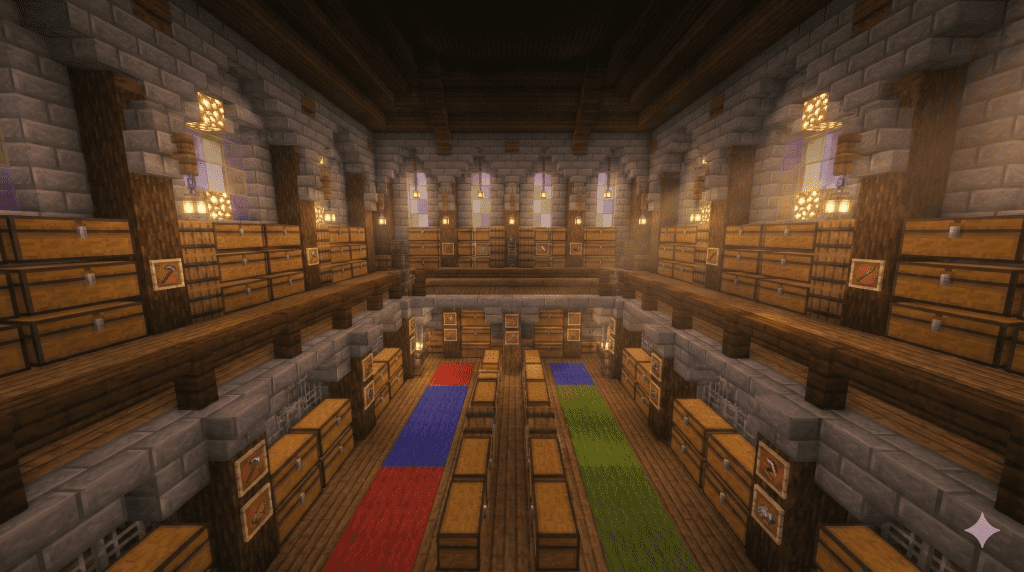
Storage Is the Real Core of a Base
Most base problems are storage problems.
Poor storage leads to clutter. Clutter leads to wasted time. A well-planned storage system removes both issues.
Good survival bases prioritize accessible, expandable storage. The design does not need to be complex. It needs to be easy to use and easy to grow.
If storage feels effortless, the rest of the base usually works.
Plan for Expansion From the Start
Bases rarely fail because they are too big. They fail because they cannot grow.
A base should leave room for additional rooms, farms, and infrastructure. That does not require building everything at once. It requires leaving space and thinking ahead.
When expansion is planned, upgrades feel natural instead of disruptive.
Location Matters More Than Design
Where a base is built often matters more than how it looks.
Access to resources, terrain, and travel routes affects long-term efficiency. A beautiful base in a bad location creates constant inconvenience.
Strong base locations reduce friction. Weak locations demand workarounds.
Choosing wisely at the start saves effort later.
House and Shelter Builds That Scale With Progression
A good house in Minecraft is not just a starting shelter.
In survival worlds, houses work best when they can grow with the player. Builds that only solve early-game needs often get abandoned once progression accelerates. Scalable houses avoid that problem.
The goal is to build something useful now that still makes sense later.
Early-Game Houses That Do Not Get Replaced
Early houses should prioritize speed and function.
Protection, basic storage, and crafting access matter more than size or detail. A simple structure that sits close to resources and travel routes often outperforms a complex design built too early.
When early houses are designed with future expansion in mind, they become foundations instead of temporary fixes.
Mid-Game Homes That Support Expansion
Mid-game is when houses start to matter.
At this stage, builds should support larger storage systems, enchanting setups, and nearby farms. Layout becomes more important than appearance. Clear paths and defined spaces reduce friction as activity increases.
A well-planned mid-game home often becomes the core of a long-term base.
Late-Game Houses as Permanent Structures
Late-game houses are less about survival and more about efficiency and comfort.
These builds often integrate storage, automation, and transport into a single structure. The design can be more detailed because the foundation already works.
Permanent houses succeed when they feel intentional rather than oversized.
Avoid Overbuilding Too Early
Overbuilding creates problems instead of solving them.
Large houses built too soon drain resources and slow progression. Smaller builds that expand gradually stay useful longer and are easier to adjust.
Progression should guide the size of a house, not the other way around.
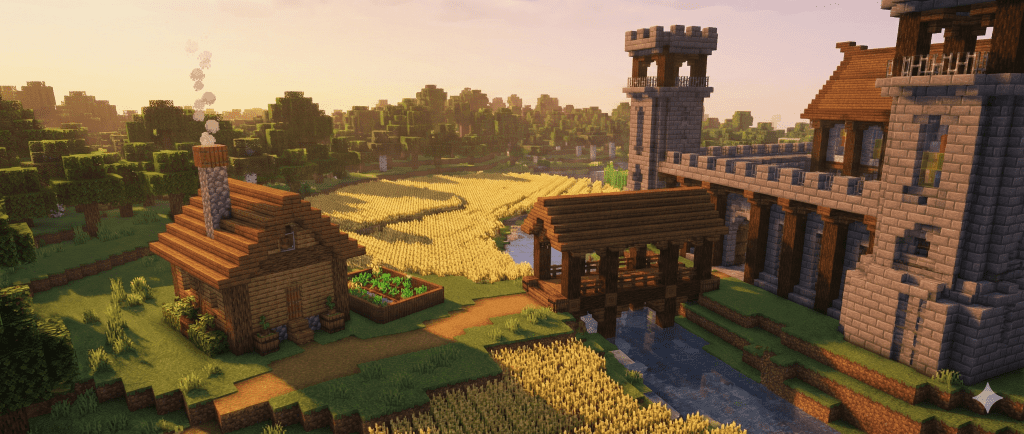
Large Builds Worth Committing To
Large builds can define a survival world, but only when they are chosen deliberately.
These projects demand time, resources, and long-term commitment. When they work, they become landmarks and functional hubs. When they fail, they turn into unfinished monuments to wasted effort.
The key is knowing when a large build makes sense.
When Big Builds Are a Good Idea
Large builds work best once basic survival systems are stable.
Reliable gear, steady resource flow, and secure storage reduce friction. At that point, committing to a large project no longer slows progress. It becomes part of it.
Timing matters more than ambition.
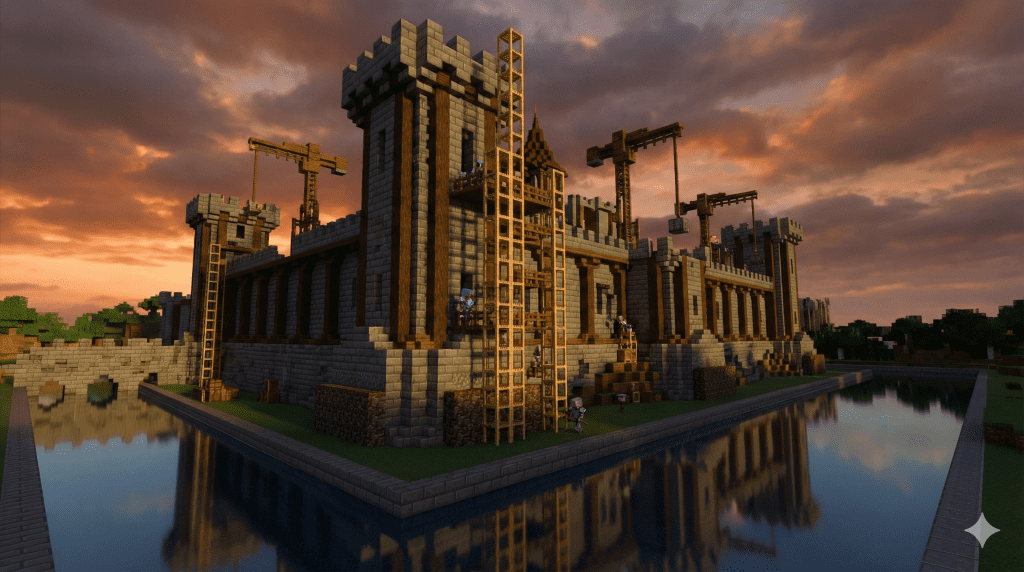
Castles, Megabases, and Themed Projects
Castles and megabases offer scale and identity.
These builds succeed when they serve a purpose beyond appearance. Storage halls, transport hubs, and farm integration give them long-term value.
Theme alone is not enough. Function keeps large builds relevant.
Resource Reality Checks
Big projects fail most often because resource costs are underestimated.
Stone, wood, and decorative blocks add up quickly. Gathering materials mid-build interrupts momentum and leads to burnout.
Planning resource needs ahead of time keeps projects moving and manageable.
Commit or Scale Back
Not every large build needs to be finished immediately.
Breaking projects into stages helps maintain progress and motivation. Partial completion is fine if each stage remains usable.
Large builds should feel expandable, not overwhelming.
Functional Builds That Improve Your World
Some Minecraft builds quietly change everything.
Functional builds reduce friction. They save time, simplify routines, and make progression smoother. While they may not always look impressive, their impact is felt every time you play.
In survival worlds, these builds often matter more than decorative ones.
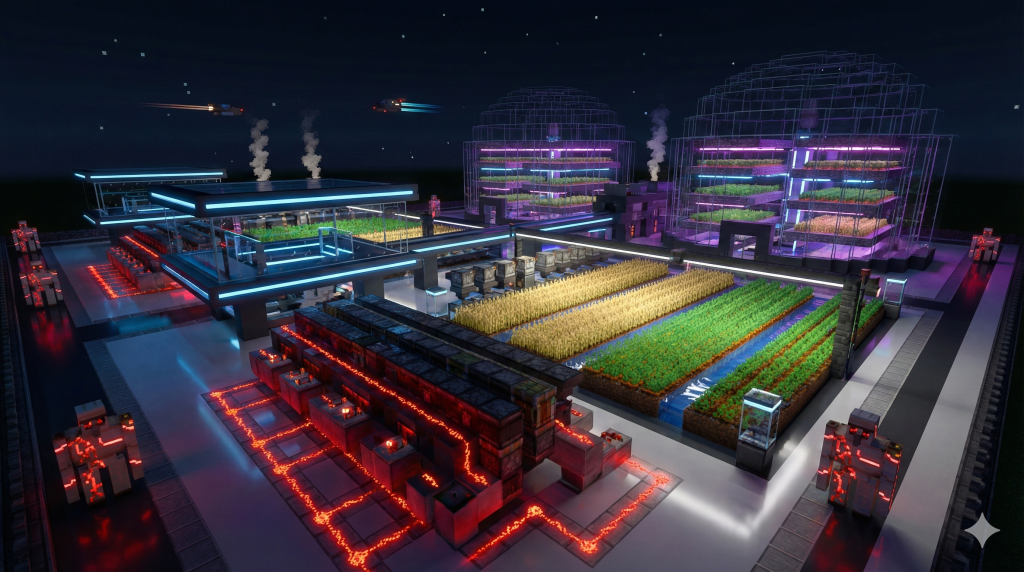
Farms as Infrastructure, Not Side Projects
Farms work best when treated as part of the world’s core systems.
XP farms support enchanting and repairs. Mob farms supply materials used across many projects. Iron farms remove one of the most common resource bottlenecks.
When farms are planned intentionally, they become permanent infrastructure instead of temporary solutions.
Automation Should Reduce Effort
Automation is useful only when it simplifies gameplay.
Overcomplicated designs can create maintenance problems and distract from other goals. Simple, reliable systems often outperform complex ones in survival worlds.
A functional build succeeds when it works consistently without constant adjustment.
Connect Functional Builds Together
Isolated builds waste potential.
Farms, storage, and processing areas work best when connected through clear paths or transport systems. Moving items and players efficiently reduces downtime and keeps worlds feeling organized.
Connected systems turn individual builds into a cohesive world.
Build What You Will Actually Use
Not every functional build is necessary.
Some farms look impressive but see little use. Others solve problems you do not have. Building based on real needs keeps worlds efficient and manageable.
If a build does not improve how you play, it may not be worth building yet.
Aesthetic Builds That Still Serve a Purpose
Aesthetic builds do not have to be useless.
In survival worlds, the best-looking builds often succeed because they still do something. They provide structure, guide movement, or support other systems without drawing attention to themselves.
Purpose gives aesthetic builds longevity.
Decoration With Intent
Decoration works best when it reinforces function.
Paths clarify movement. Lighting improves safety. Visual landmarks make navigation easier. When decoration supports usability, it earns its place in survival worlds.
Pure decoration tends to get ignored over time. Functional decoration continues to matter.
Blending Function Into Visual Design
Strong builds hide function inside form.
Storage rooms can become architectural features. Farms can be integrated into landscapes. Redstone and automation do not need to be visible to be effective.
When function is built into design, worlds feel cohesive instead of mechanical.
Avoid Creative-Only Concepts
Many popular builds assume unlimited resources.
Survival worlds demand restraint. Builds that rely on rare blocks or massive quantities often stall progress and remain unfinished.
Aesthetic builds should match what is realistic to maintain. Sustainable designs age better.
Improve Existing Builds Before Adding New Ones
Refinement often beats expansion.
Improving lighting, layout, or materials can dramatically change how a build feels. Small adjustments create polish without starting new projects.
Purposeful refinement keeps worlds clean and manageable.
Using Seeds to Support Building Ideas
World seeds influence how easy or difficult building becomes.
Terrain, biome layout, and nearby structures affect base placement, resource access, and long-term expansion. Choosing builds that match the world reduces friction and makes projects more enjoyable.
Seeds work best when treated as a foundation, not a limitation.
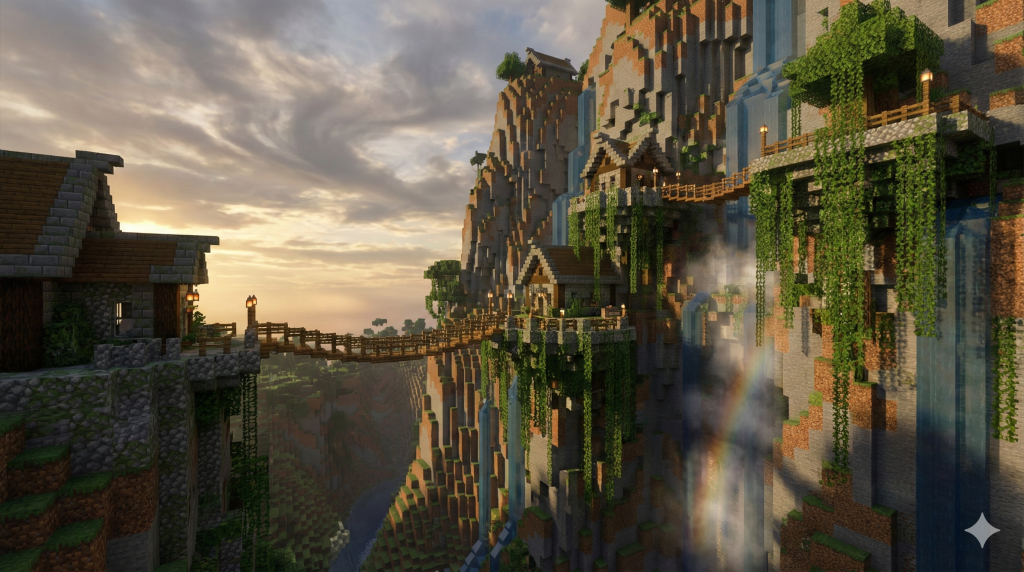
Match Builds to Terrain
Some builds thrive in specific environments.
Mountain bases benefit from vertical space. Plains support large farms. Coastal areas simplify transport and exploration. Fighting terrain adds unnecessary complexity.
Let the world shape the build instead of forcing designs into poor locations.
Use Seeds to Enable Long-Term Projects
Strong seeds make large builds more practical.
Access to villages, strongholds, and varied biomes reduces travel time and resource strain. That support matters more as projects grow in size and scope.
Good seeds create options. Bad seeds create work.
Curated Seeds Beat Random Exploration
Random worlds can be fun, but curated seeds save time.
Using seeds selected for survival building allows focus on construction instead of problem solving. This approach works especially well for players planning long-term projects.
Curated seed lists also help compare options before committing.
Link Ideas to Existing Seed Resources
Seeds do not need to be explained repeatedly.
Grouping seed recommendations by build type keeps content focused and avoids duplication. Readers can explore deeper when needed without losing context.
This approach keeps building guides clean and intentional.
Conclusion
Minecraft building ideas matter most when they serve a purpose.
Survival worlds improve when builds are chosen intentionally. Bases anchor progress. Farms reduce friction. Large projects add identity. Aesthetic choices work best when they support function.
The best worlds are not built faster. They are built smarter.
Frequently Asked Questions
What should I build first in a Minecraft survival world
Start with a base that centralizes storage, crafting, and basic safety. Early builds should reduce friction and support progression rather than focus on appearance.
Are large builds worth it in survival mode
Large builds are worth it only after core systems are stable. Reliable gear, storage, and resource flow should come first. Without that foundation, large projects often stall or get abandoned.
Should I focus on function or aesthetics when building
Function should come first. Aesthetic builds last longer when they also serve a purpose. Decoration works best when it supports usability, navigation, or organization.
How many farms do I actually need
Only build farms that solve real problems in your world. XP, basic mob drops, and iron are common priorities. Additional farms should be built as needs appear, not preemptively.
Is it better to rebuild a base or upgrade an existing one
Upgrading usually saves time and resources. Rebuilding makes sense only when location or layout creates constant inefficiency. Expansion-friendly designs reduce the need to start over.
Do seeds really matter for building projects
Yes. Terrain and biome layout affect build difficulty and scalability. Choosing seeds that support your build goals reduces unnecessary work and improves long-term results.



0 Comments